Please mind our dust!

We are currently working on revamping our website!
Thank you for your patience!

CRD Solutions

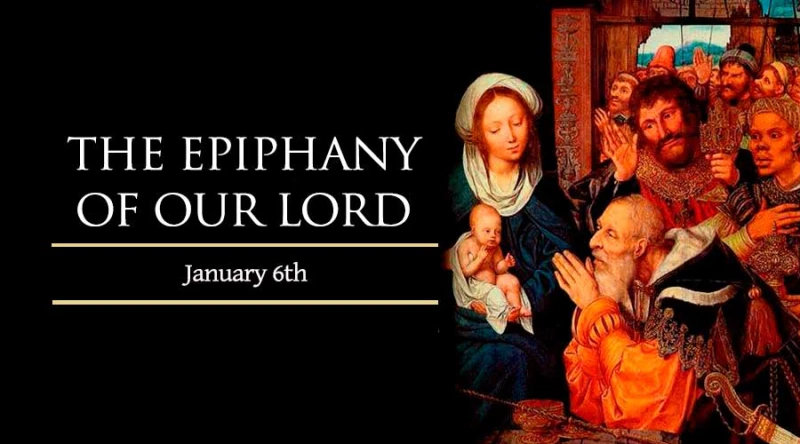
The Epiphany Of Our Lord


The Epiphany Of Our Lord

Feast date: Jan 06

The Epiphany of Our Lord is the Christian feast observed on Jan. 6, 2016.  The word “epiphany” comes from the Greek epiphainen, a verb that means “to shine upon,” “to manifest,” or “to make known.” Thus, the feast of the Epiphany celebrates the many ways that Christ has made Himself known to the world, mainly the three events that manifested the mission and divinity of Christ:  the visit of the Magi (Matthew 2:1-12), the baptism of Jesus (Mark 1:9-11), and the miracle at Cana (John 2:1-11). 

The visit of the Magi is emphasized on Epiphany Day, and Christ’s baptism is celebrated the first Sunday that follows.

The Epiphany Of Our Lord Read More »

Memorial of Saint John Neumann, Bishop

Reading I 1 Jn 4:11-18

Beloved, if God so loved us,
we also must love one another.
No one has ever seen God.
Yet, if we love one another, God remains in us,
and his love is brought to perfection in us.

This is how we know that we remain in him and he in us,
that he has given us of his Spirit.
Moreover, we have seen and testify
that the Father sent his Son as savior of the world.
Whoever acknowledges that Jesus is the Son of God,
God remains in him and he in God.
We have come to know and to believe in the love God has for us.

God is love, and whoever remains in love remains in God and God in him.
In this is love brought to perfection among us,
that we have confidence on the day of judgment
because as he is, so are we in this world.
There is no fear in love,
but perfect love drives out fear
because fear has to do with punishment,
and so one who fears is not yet perfect in love.

Responsorial Psalm 72:1-2, 10, 12-13

R.        (see 11)  Lord, every nation on earth will adore you.
O God, with your judgment endow the king,
            and with your justice, the king’s son;
He shall govern your people with justice
            and your afflicted ones with judgment.
R.        Lord, every nation on earth will adore you.
The kings of Tarshish and the Isles shall offer gifts;
            the kings of Arabia and Seba shall bring tribute.
R.        Lord, every nation on earth will adore you.
For he shall rescue the poor when he cries out,
            and the afflicted when he has no one to help him.
He shall have pity for the lowly and the poor;
            the lives of the poor he shall save.
R.        Lord, every nation on earth will adore you.

Alleluia See 1 Tm 3:16

R. Alleluia, alleluia.
Glory to you, O Christ, proclaimed to the Gentiles.
Glory to you, O Christ, believed in throughout the world.
R. Alleluia, alleluia.

Gospel Mk 6:45-52

After the five thousand had eaten and were satisfied,
Jesus made his disciples get into the boat
and precede him to the other side toward Bethsaida,
while he dismissed the crowd. 
And when he had taken leave of them,
he went off to the mountain to pray. 
When it was evening,
the boat was far out on the sea and he was alone on shore. 
Then he saw that they were tossed about while rowing,
for the wind was against them. 
About the fourth watch of the night,
he came toward them walking on the sea. 
He meant to pass by them.  
But when they saw him walking on the sea,
they thought it was a ghost and cried out. 
They had all seen him and were terrified. 
But at once he spoke with them,
“Take courage, it is I, do not be afraid!” 
He got into the boat with them and the wind died down. 
They were completely astounded. 
They had not understood the incident of the loaves. 
On the contrary, their hearts were hardened.

– – –

Lectionary for Mass for Use in the Dioceses of the United States, second typical edition, Copyright © 2001, 1998, 1997, 1986, 1970 Confraternity of Christian Doctrine; Psalm refrain © 1968, 1981, 1997, International Committee on English in the Liturgy, Inc. All rights reserved. Neither this work nor any part of it may be reproduced, distributed, performed or displayed in any medium, including electronic or digital, without permission in writing from the copyright owner.

Memorial of Saint John Neumann, Bishop Read More »

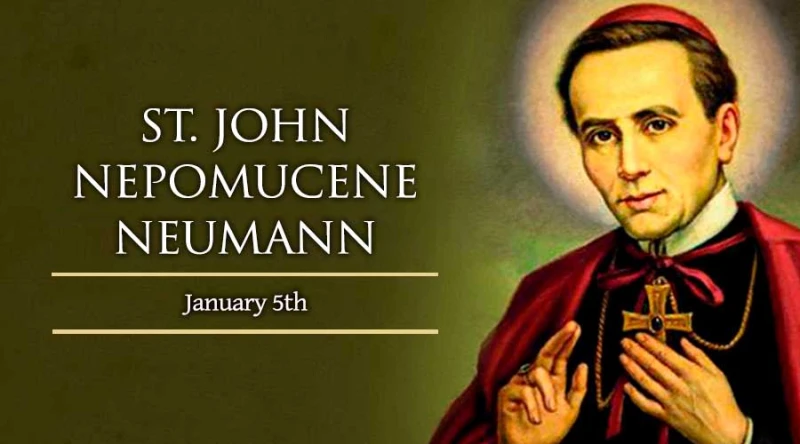
St. John Nepomucene Neumann


St. John Nepomucene Neumann

Feast date: Jan 05

John Neumann was born on March 28, 1811, in Bohemia, now part of the Czech Republic. His parents were Philip and Agnes Neumann. He had four sisters and a brother. After college, John entered the seminary. When the time came for his ordination, the bishop was sick and the date was never rescheduled as Bohemia had enough priests at the time. Since he had been reading about missionary activities in the United States, John decided to go to America and request to be ordained there. He walked most of the way to France and then boarded a ship to New York.

John arrived in Manhattan on June 9, 1836, where he was gladly welcomed by Bishop John Dubois, who at that time had only 36 priests for the 200,000 Catholics living in the state of New York and part of New Jersey. Just 16 days after his arrival, John was ordained a priest and sent to Buffalo.

Father John established himself in a small log parish house. He hardly ever lit a fire and often lived on only bread and water. He joined the Redemptorist order and continued his missionary work until he was elected bishop of Philadelphia in 1852. As bishop, Neumann built 50 churches and began the constuction of a cathedral. He opened almost 100 schools, and the number of parochial school students grew from 500 to 9,000. He died suddenly on January 5, 1860.

He became the first American bishop to be beatified. He was canonized by Pope Paul VI on June 19, 1977. He is buried in St. Peter the Apostle Church in Philadelphia.

St. John Nepomucene Neumann Read More »

Memorial of Saint Elizabeth Ann Seton, Religious

Reading I 1 Jn 4:7-10

Beloved, let us love one another,
    because love is of God;
    everyone who loves is begotten by God and knows God.
Whoever is without love does not know God, for God is love.
In this way the love of God was revealed to us:
God sent his only-begotten Son into the world
    so that we might have life through him.
In this is love:
    not that we have loved God, but that he loved us
    and sent his Son as expiation for our sins.

Responsorial Psalm 72:1-2, 3-4, 7-8

R.    (see 11)  Lord, every nation on earth will adore you.
O God, with your judgment endow the king,
    and with your justice, the king’s son;
He shall govern your people with justice
    and your afflicted ones with judgment.
R.    Lord, every nation on earth will adore you.
The mountains shall yield peace for the people,
    and the hills justice.
He shall defend the afflicted among the people,
    save the children of the poor.
R.    Lord, every nation on earth will adore you.
Justice shall flower in his days,
    and profound peace, till the moon be no more.
May he rule from sea to sea,
    and from the River to the ends of the earth.
R.    Lord, every nation on earth will adore you.

Alleluia Lk 4:18

R. Alleluia, alleluia.
The Lord has sent me to bring glad tidings to the poor
and to proclaim liberty to captives.
R. Alleluia, alleluia.

Gospel Mk 6:34-44

When Jesus saw the vast crowd, his heart was moved with pity for them,
for they were like sheep without a shepherd;
and he began to teach them many things. 
By now it was already late and his disciples approached him and said,
“This is a deserted place and it is already very late. 
Dismiss them so that they can go 
to the surrounding farms and villages
and buy themselves something to eat.” 
He said to them in reply,
“Give them some food yourselves.” 
But they said to him,
“Are we to buy two hundred days’ wages worth of food
and give it to them to eat?” 
He asked them, “How many loaves do you have?  Go and see.” 
And when they had found out they said,
“Five loaves and two fish.” 
So he gave orders to have them sit down in groups on the green grass. 
The people took their places in rows by hundreds and by fifties. 
Then, taking the five loaves and the two fish and looking up to heaven, 
he said the blessing, broke the loaves, and gave them to his disciples
to set before the people;
he also divided the two fish among them all. 
They all ate and were satisfied. 
And they picked up twelve wicker baskets full of fragments
and what was left of the fish. 
Those who ate of the loaves were five thousand men.

– – –

Lectionary for Mass for Use in the Dioceses of the United States, second typical edition, Copyright © 2001, 1998, 1997, 1986, 1970 Confraternity of Christian Doctrine; Psalm refrain © 1968, 1981, 1997, International Committee on English in the Liturgy, Inc. All rights reserved. Neither this work nor any part of it may be reproduced, distributed, performed or displayed in any medium, including electronic or digital, without permission in writing from the copyright owner.

Memorial of Saint Elizabeth Ann Seton, Religious Read More »

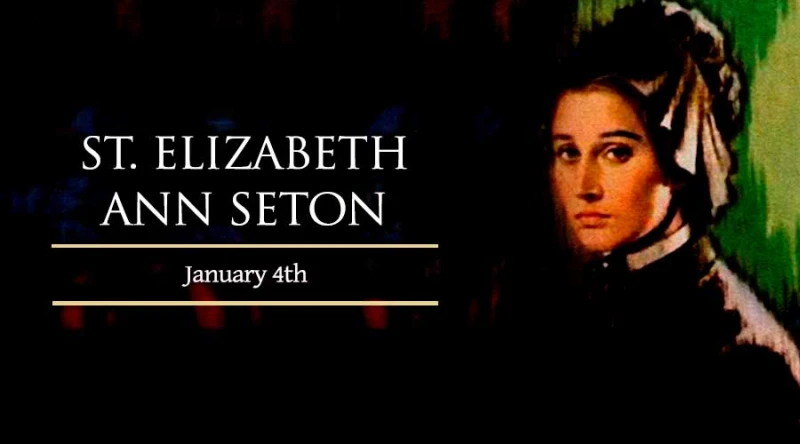
St. Elizabeth Ann Seton


St. Elizabeth Ann Seton

Feast date: Jan 04

Saint Elizabeth Ann Seton was the foundress and first superior of the Sisters of Charity in the United States.  She was born to Episcopalian parents into New York City high society on August 28, 1774.

Her father, Dr. Richard Bayley was the first professor of anatomy at Columbia College and praised for his work as the health officer of the Port of New York.  Her mother, Catherine Charlton, daughter of an Anglican minister of Staten Island, N.Y. died when Elizabeth was three years old, leaving her and two other young daughters.

Elizabeth was married on January 25, 1794 in St. Paul’s Episcopalian Church to William Magee Seton. When his father died, they took over custody of William’s seven half brothers and sisters, as well as the family’s importing business. William fell into financial troubles, and later died of tuberculosis in Pisa, Italy in December 1803 while attempting to get help from his business friends. After getting to know the Catholic Church in Italy, Elizabeth fasted and prayed for light. Finally, on Ash Wednesday, March 14, 1805, she was received into the Church.

Her conversion unleashed a storm among her Protestant relatives and friends and made her financial strains even greater.  In January 1806, Cecilia Seton, Elizabeth’s young sister-in-law, became very ill and begged to see the ostracized convert and told her of her desire to become a Catholic. When Cecilia’s decision was known threats were made to have Mrs. Seton expelled from the state by the Legislature.  On her recovery Cecilia fled to Elizabeth for refuge and was received into the Church.

Elizabeth moved to Baltimore in 1808 and with the help of a Catholic convert, a farm was purchased two miles from Mt. St. Mary’s College and Mrs. Seton took vows privately before Archbishop Carroll and her daughter Anna.

In 1810, Bishop Flaget was commissioned to obtain in France the rules of the Sisters of Charity of St. Vincent de Paul. The rule, with some modifications, was approved by Archbishop Carroll in January 1812, and adopted.  Mrs. Seton was elected superior against her will and in spite of the fact that she had also to care for her children.  Many joined the community; including Mother Seton’s daughter, Anna, who died during her novitiate (March 12, 1812), but had been permitted to pronounce her vows on her deathbed. Mother Seton and eighteen sisters made their vows on July 19, 1813.

The third time she was elected superior in 1819, she protested that it was the “election of the dead,” but she lived for two years more, finally succuming to a pulmonary infection.  She died in Emmitsburg, Maryland on January 4, 1821.

In 1880 Cardinal Gibbons (then Archbishop) urged the steps be taken toward her canonization. Elizabeth Ann Seton was beatified in 1963 and she was canonized on September 14, 1975.

St. Elizabeth Ann Seton Read More »